
Alphabet Soup
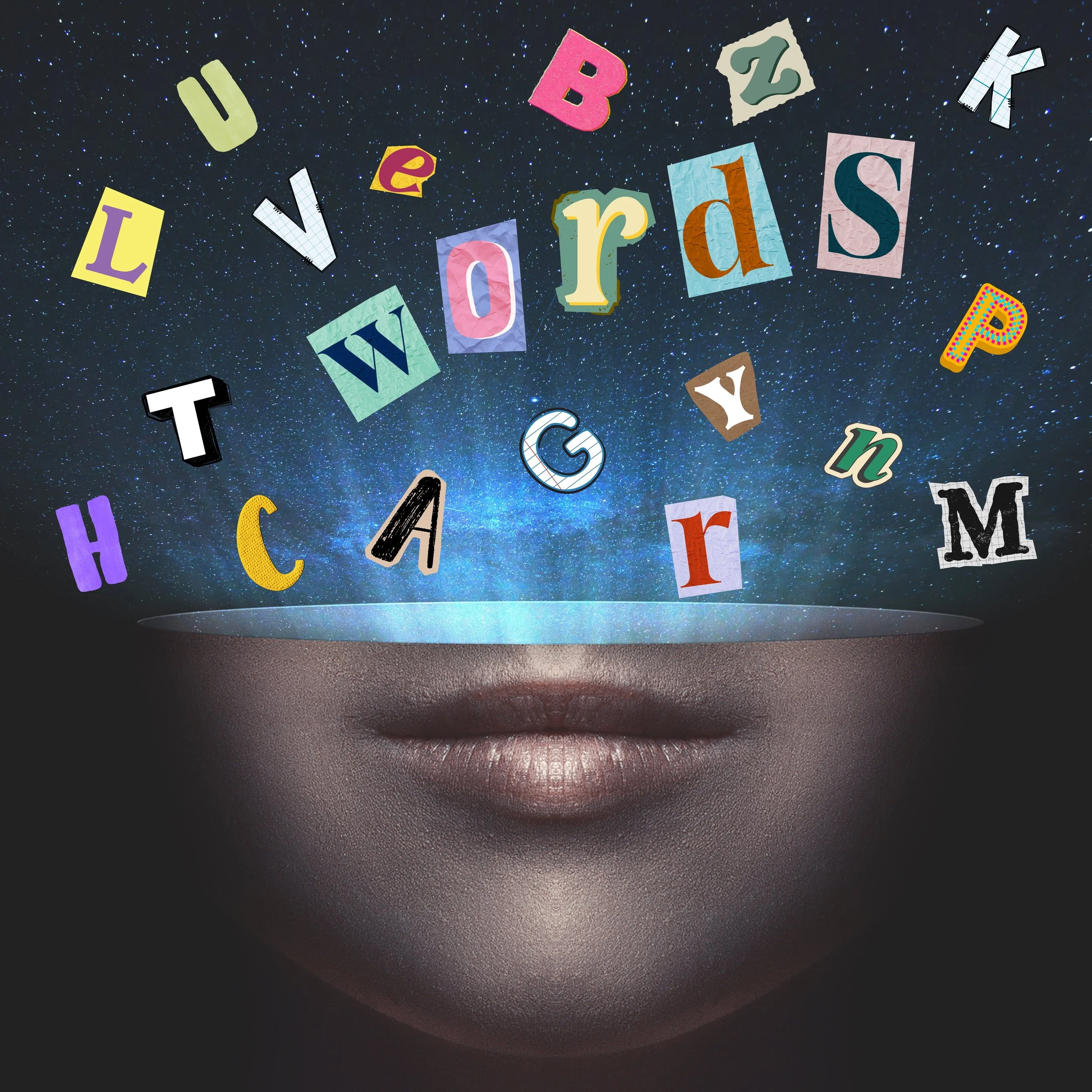
I was fascinated with words from the beginning. I learned to talk early and spoke in complete sentences, often rambling on so quickly I’d stutter and trip over what I was saying; so strong was the need to get it all out.
As a toddler, I had a book about animals from A to Z. The first one was antelope. And it surprised me, that word. Not the animal itself—although the fact that something had such an odd name was interesting to my curious mind—but the word. It began with ANT, and I knew very well what that was. But add the “elope,” and it became something entirely different.
B was for baboon, which sounded close to balloon but looked nothing like one. I memorized the book, but when I would recite it, it wasn’t the animals I’d see, but the different letters put together to make the name.
How many more words existed? I needed to know. I’d string together letters and ask my parents what word they made. I didn’t realize vowels were needed along with consonants, and most of what I formed was nonsensical. So, it came to my understanding that not all letters put together made actual words. But still, I needed to know the way it worked, how to make more words, what order to put the letters in. And when reading was finally taught in first grade, it came so easily to me it was like I’d always been doing it. Perhaps I had.
Before I could write the words myself, I wrote a story, drawing the pictures and having my Aunt Grace—who was not my aunt by blood, same as the majority of my “family”—write the story out as I dictated it. She stapled it together with the drawings I made and, lo and behold, it was the first book I ever created.
And I was hooked. On stories, books, creating characters and worlds. But most of all, those delicious, beautiful-sounding words that formed and danced in my mind and through my brain onto paper and, later, a computer screen.
As an adolescent, I carried around a notebook, filling it with poetry and vocabulary words. If I came across a word I didn’t know, I would write it down, look up the definition, then use it as often as I could. One of my favorite activities was to write a poem with as many new words as possible. And reading the dictionary was one of my most common pastimes.
It’s weird, I know, an autistic person being fascinated with words. After all, autism is considered a communication disorder, among other things. But my problem is not communicating through the written word. In fact, that’s the way I best understand the world. Before I fully grasped societal norms and expectations, how to interact with my peers, what was considered acceptable and what was not, I used books to help navigate a constantly confusing existence. I became the characters, adopting their personalities, unsure of how to move in the world as myself and feeling safer doing so as someone else. Around age ten, I began creating my own characters, and dissociating as those characters was the only way I managed to cope with ongoing trauma. Soon after that, I began creating entire worlds and escaping into them in my mind so as not to be fully present when life was too painful. Writing quite literally became my means of survival.
Things are better now. I have an incredible life, truly. I am safe and I am loved. But still, words are my fascination. They dance in my head constantly, eager to be strung together in the perfect way. Resonant and melodic. Appealing to the eye and ear. They wake me up in the middle of the night, desperate to tumble from my brain onto the page, wanting to be heard, seen, felt. Seeking me out like a moth to a flame, knowing I will heed their call, write them down and arrange them just right, then share them with the world.
Beautiful, exquisite things. So simple, yet so evocative, taking on a life of their own and breathing meaning into everything I could never quite communicate out loud.